 Image 1 of 3
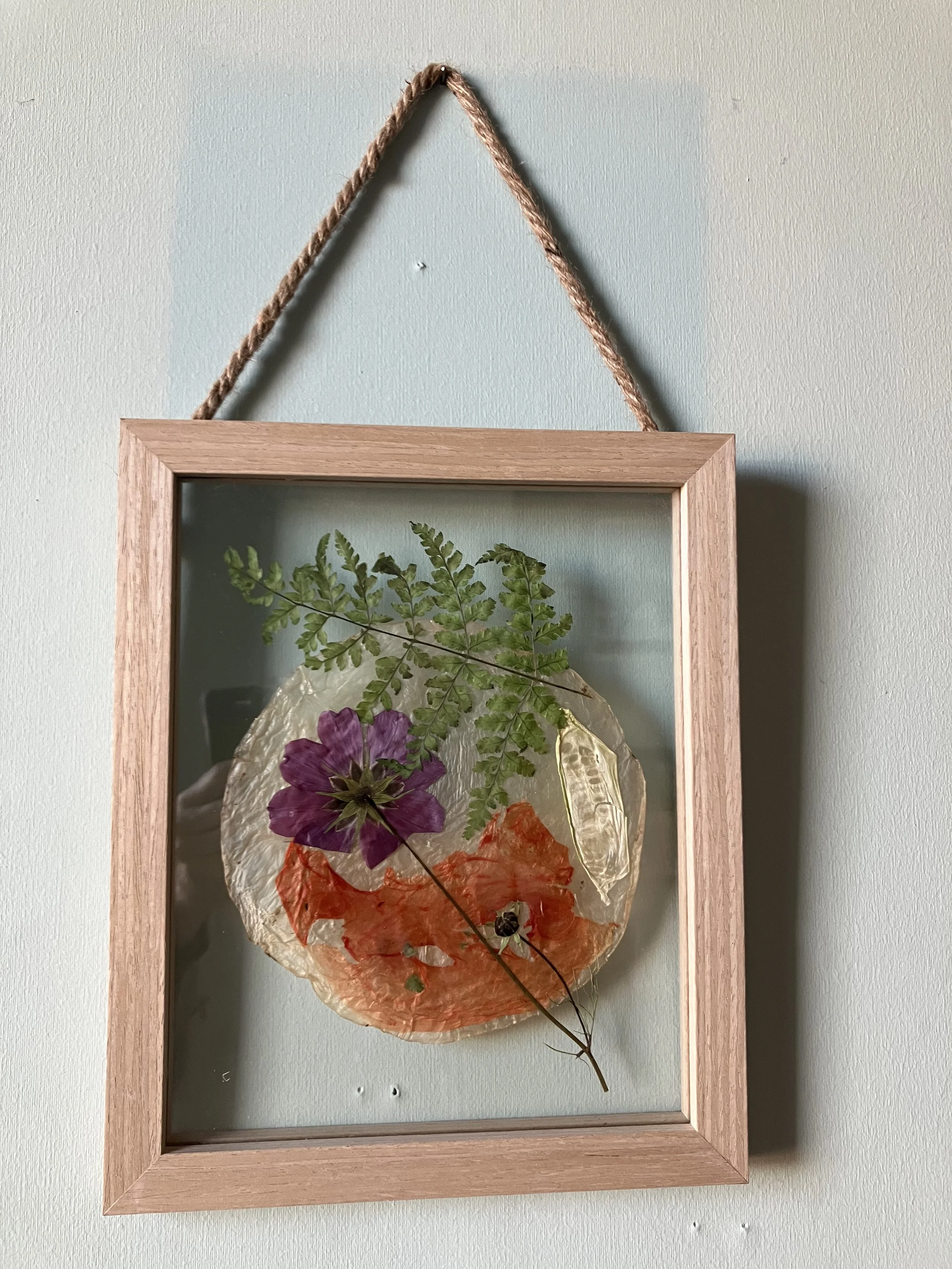 Image 2 of 3
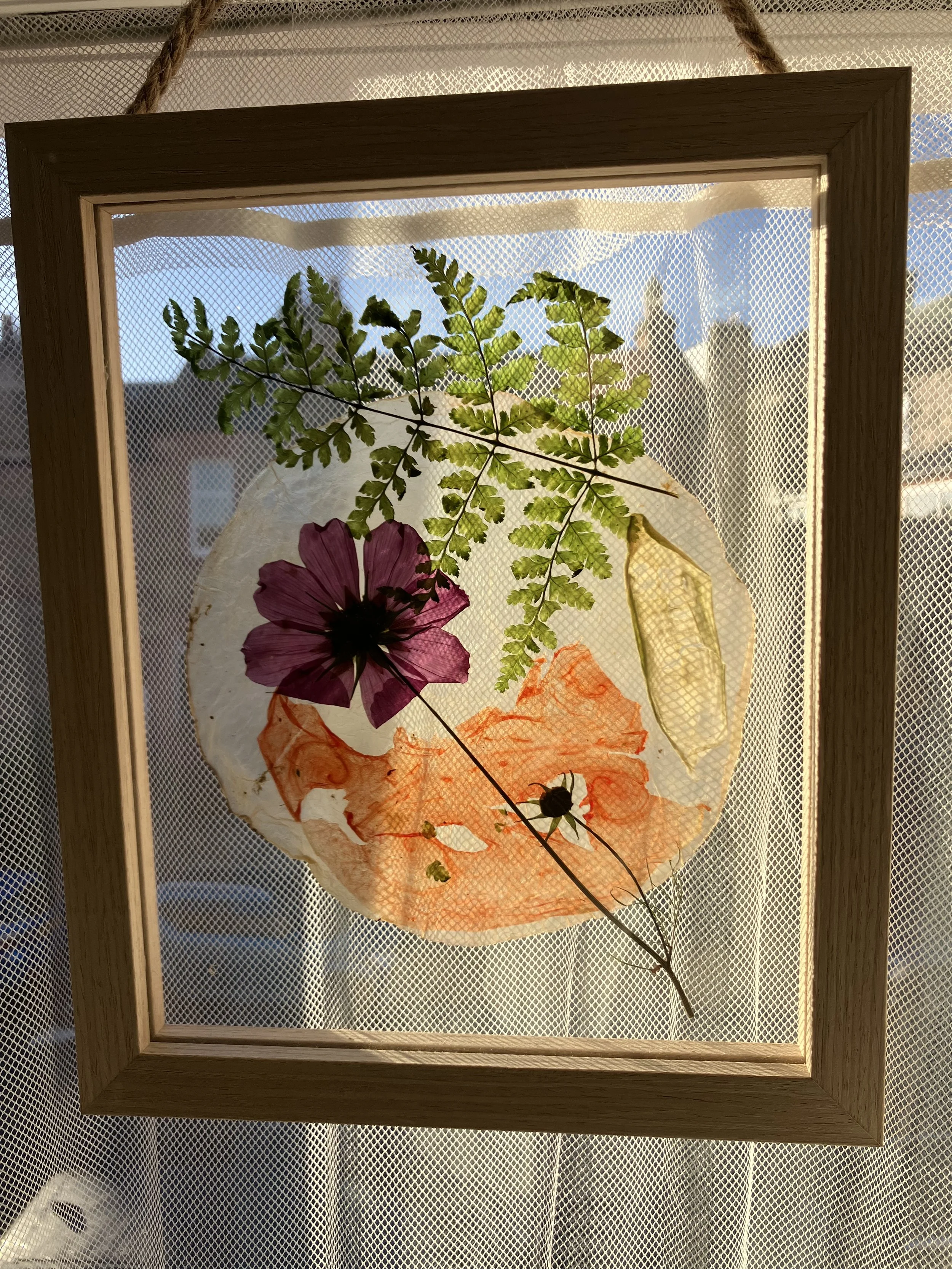 Image 3 of 3
EPIBIOSIS
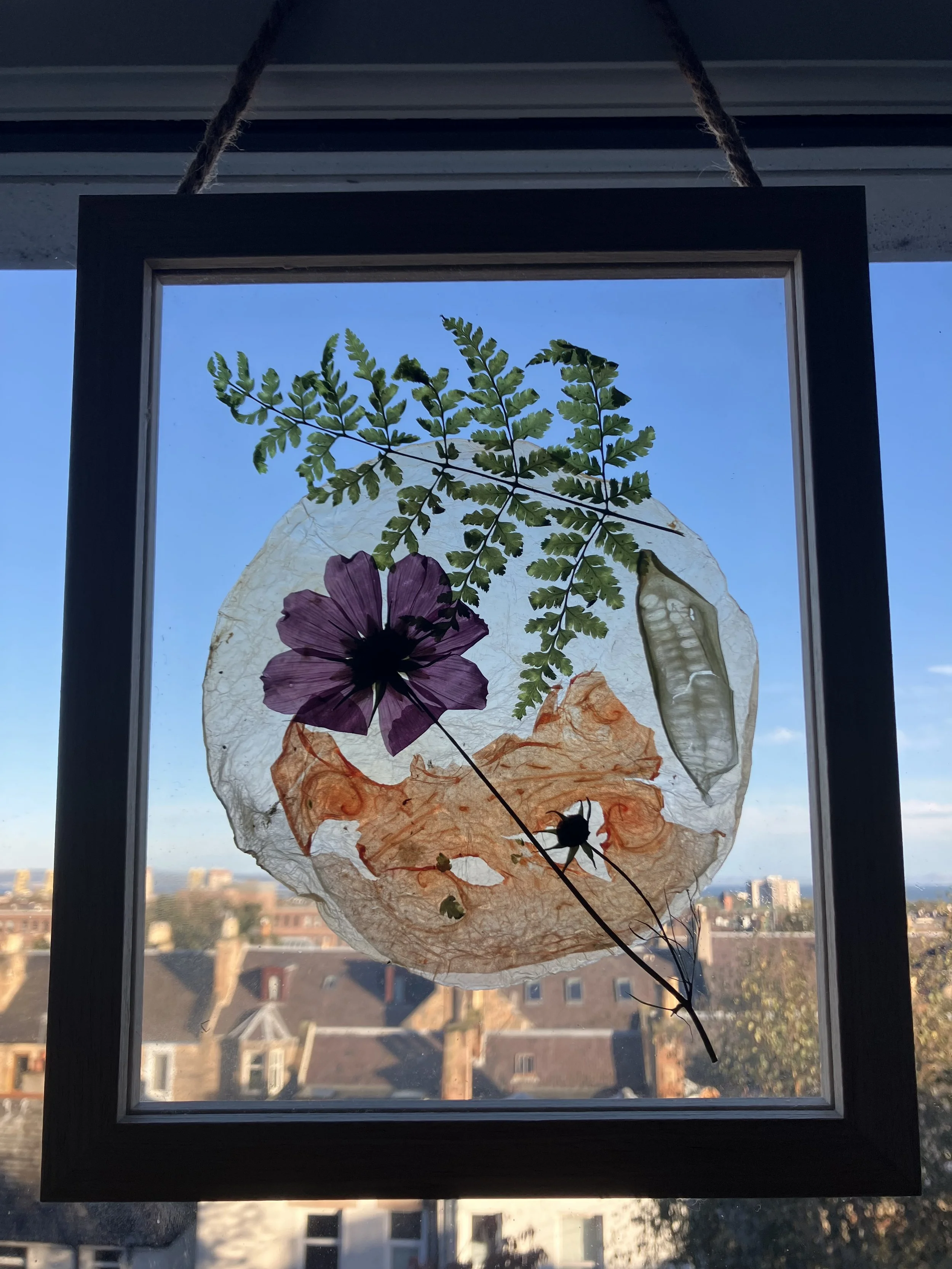
The epibiont: The coloniser. Nature.
The basibiont: The substrate. Scoby.
The Relationship: Epibiosis, where one organism uses a surface strictly for physical support without harming it. Like a barnacle on a shell.
Using a byproduct of fermentation as a method to preserve the flower before it wilts, the seed before it drops, the vegetable before it rots, the mushroom before it returns to the earth and the leaf before it dries and decomposes.
The scoby - (an acronym for symbiotic culture of bacteria and yeast) otherwise known as the mother, mushroom or pellicle forms on the surface while brewing kombucha. It is the byproduct of making kombucha.
The scoby consumes sugar and caffeine in sweet tea to transform it into Kombucha. The yeast breaks down sugar, and the bacteria turn it into healthy acids, making the drink tangy probiotic fizzy and sour. If you brew kombucha you will know how fast they grow. However I have found that if you are waiting for them to grow it takes forever, like watching water boil.
For many years at kombucha workshops I have been telling people how to use all the spare scobies. Start a scoby hotel, give them to friends, use as a facemask, an alternative to fish in vegan sushi, as dog treats, as bandages, (they are said to leach toxins) fruit leather, smoothies and if all else fails, they are good for your compost heap.
Little did I know I'd end up dehydrating them to create an installation for a fungi festival.
This project has made me see nature and vegetables in a completely different light. Walks with Rusty take a little longer as I collect my epibionts. Mushrooms, wildflowers, leaves, cultivated flowers, weeds, shells, seaweed. Sweetcorn silk, once an annoyance caught between my teeth, is now a thing of beauty. Cucumbers, watermelons and marrows, not just a tasty snack, I now see molecular forms. Trapping all of these between scobies to preserve them.
I have realised how much I truly love chopping vegetables (another unusual hobby to add to my list).
I’ve noted how green tea and black tea scobies differ. The green tea ones are more rubbery and the black tea ones darker and more brittle.
Scobies donated by Caroline Thornton, Lara Celini, Kev Rutherford and Julia Mackenzie.
By Ruth Munro of Edinburgh Fermentarium